Draco Malfoy
Draco Malfoy is the son of Lucius Malfoy, a wealthy pure-blood wizard and a former supporter of Lord Voldemort. Throughout Harry Potter's second year at Hogwarts, Draco serves as a primary antagonist, embodying pure-blood supremacist ideology and acting as a foil to Harry. His role deepens the story's exploration of prejudice, identity, and the legacy of Voldemort, as he becomes the Slytherin Quidditch Seeker on a team equipped with Nimbus Two Thousand and One brooms bought by his father, and he is the one who publicly uses the slur "Mudblood" against Hermione Granger, an act that triggers a violent confrontation and reveals the depth of his family's bigotry.
Identity and Background
Draco Malfoy is introduced as a pale, pointed-faced boy with cold gray eyes, the same features as his father, Lucius Malfoy. He is a pure-blood wizard from a wealthy family that has long been in Slytherin House, and he is constantly accompanied by his large, thuggish cronies, Vincent Crabbe and Gregory Goyle. Draco is deeply proud of his family's status and their disdain for Muggle-borns, a prejudice he openly displays. He is also a student at Hogwarts School of Witchcraft and Wizardry, where he is in Slytherin House and is a favorite of Professor Severus Snape. His father, Lucius Malfoy, is a school governor and a former supporter of Lord Voldemort, and Draco is acutely aware of his family's influence and wealth.
Arc Through the Plot
Draco's arc in the second year is defined by his escalating antagonism toward Harry Potter and his friends, his role in the Slytherin Quidditch team, and his family's involvement in the attacks of the Chamber of Secrets. He begins the year by taunting Harry about his lack of birthday cards and his friends at Hogwarts, and he later becomes the Slytherin Seeker, a position he secures through his father's donation of seven Nimbus Two Thousand and One brooms to the team. This act of buying his way onto the team is a source of pride for Draco, who openly mocks the Gryffindor team's older brooms. His rivalry with Harry intensifies during the Quidditch match against Gryffindor, where he is nearly caught off guard by the Golden Snitch hovering near his ear, but Harry's broken arm and the rogue Bludger ultimately allow Harry to win the match. Draco's behavior becomes more openly malicious after the attacks on Muggle-borns begin, and he is the one who shouts "You'll be next, Mudbloods!" at the scene of Mrs. Norris's petrification, directly implicating himself in the suspicion surrounding the Heir of Slytherin. He also taunts Ron Weasley about his family's poverty and his father's job at the Ministry, and he gloats about his father's role in having Albus Dumbledore suspended as headmaster.
Key Actions and Objectives
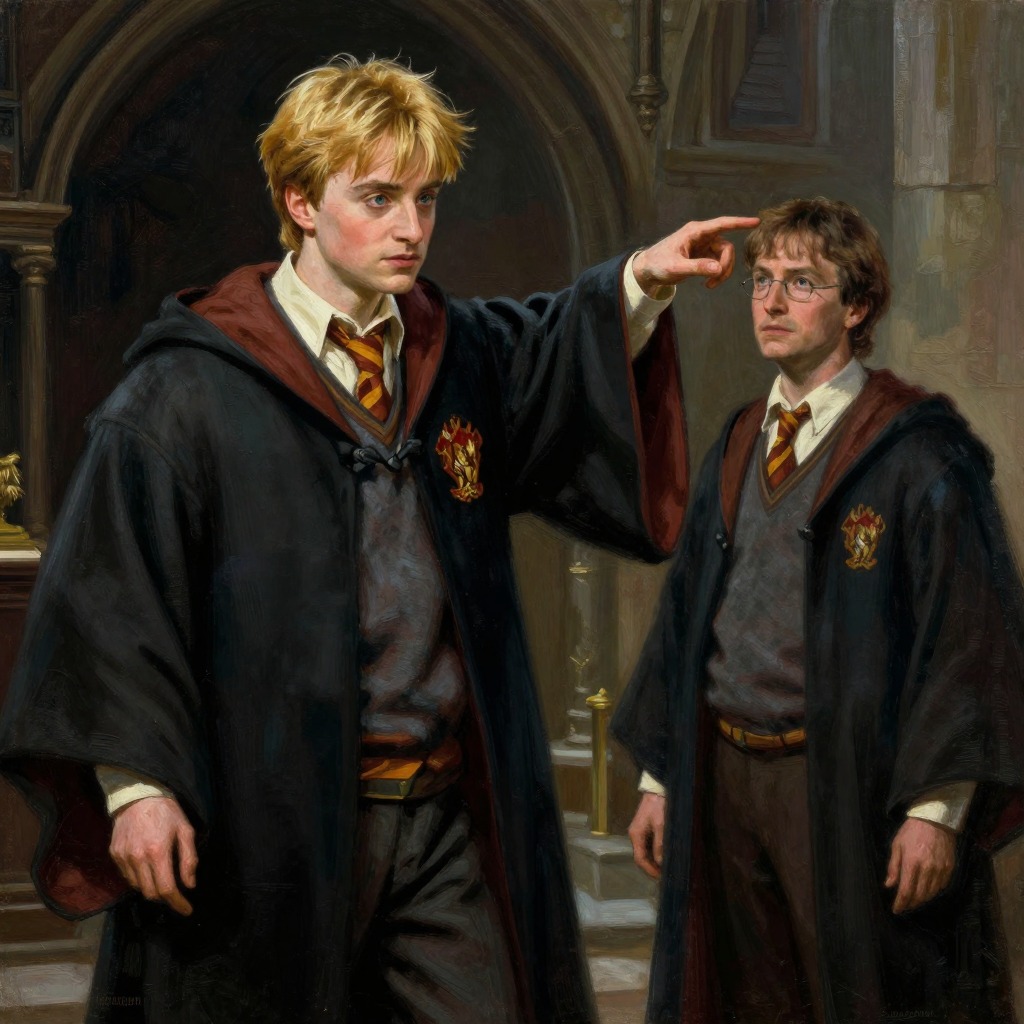
Draco's primary objective is to assert his superiority over Harry and to uphold his family's pure-blood ideology. He achieves this through a series of calculated actions: he publicly uses the slur "Mudblood" against Hermione Granger, an act that causes Ron Weasley to attempt to curse him with a backfiring wand, resulting in Ron vomiting slugs. He also attempts to humiliate Harry by drawing attention to his fame and by mocking his friends. During the Dueling Club, Draco is paired with Harry and casts the spell "Serpensortia," which produces a snake that Harry then speaks to in Parseltongue, a revelation that leads the entire school to suspect Harry of being the Heir of Slytherin. Draco's actions are consistently aimed at undermining Harry's reputation and at reinforcing the social hierarchy that places pure-bloods above Muggle-borns. He also shows a willingness to use his father's influence, as when he suggests that Professor Snape should apply for the headmaster's job after Dumbledore's suspension, promising his father's vote.
Relationships and Conflict
Draco's central relationship is his rivalry with Harry Potter, which is rooted in their opposing values and their families' histories. He also has a tense relationship with Ron Weasley, whom he mocks for his family's poverty and for his father's job at the Misuse of Muggle Artifacts Office. His relationship with Hermione Granger is one of open contempt, as he uses the slur "Mudblood" against her, revealing his deep-seated prejudice. Draco is also closely tied to his father, Lucius Malfoy, who is a source of both power and pressure; Lucius expects Draco to uphold the family's reputation and to excel, and he is disappointed when Draco's grades are not as high as Hermione's. Draco's cronies, Crabbe and Goyle, are his constant companions, but they are portrayed as dim-witted followers rather than true friends. His conflict with the Gryffindors is a central driver of the plot, as his actions and words contribute to the atmosphere of fear and suspicion surrounding the Chamber of Secrets.
Change and Ending
By the end of the year, Draco's position is significantly weakened. His father, Lucius Malfoy, is exposed as having been involved in the plot to open the Chamber of Secrets by planting Tom Riddle's diary on Ginny Weasley, and he is subsequently sacked as a school governor. Draco is no longer able to strut around the school as though he owns the place; instead, he looks resentful and sulky. His public humiliation is compounded by the fact that Harry and Ron are awarded two hundred points each for Gryffindor, securing the House Cup for the second year running, and that the attacks are finally stopped. Draco's arc ends with his influence diminished and his family's reputation tarnished, though he remains a bitter and antagonistic presence.
Thematic Significance
Draco Malfoy embodies the theme of pure-blood supremacy and the dangers of inherited prejudice. His use of the slur "Mudblood" and his family's history of supporting Voldemort serve as a stark contrast to Harry's choices and values. Draco's character illustrates how prejudice is passed down through families and how it can be used to justify cruelty and exclusion. His arc also highlights the theme of choice versus destiny: while Draco is born into a family that values pure-blood ideology, he actively chooses to embrace and perpetuate it, unlike Harry, who chooses to reject the darkness that the Sorting Hat sensed in him. Draco's role as a foil to Harry underscores the novel's central message that one's identity is defined not by blood or heritage, but by the choices one makes.